
Interactive Accelerometer Wizard
Select requirements to determine optimal accelerometer type.
Application
Bandwidth
Noise
Power
Axes
Range
Recommendation Output
Select parameters and generate result.
Frequency Analysis
Press start, then shake your device for 5 seconds.
⚠️ iOS requires a tap to grant motion access. If prompted, tap "Allow".
Frequency Domain
Real-world vibration signals are complex composite waveforms composed of signals with different frequencies. Frequency domain analysis separates these components, making it possible to identify specific mechanical events such as bearing faults or wheel impacts that would be hard to discern from a purely time-domain signal.
From Time Domain to Frequency Domain
In measurement and analysis, vibration is treated as a signal. Physically, that signal is a wave; a superposition of many individual sinusoids each with its own frequency, amplitude, and phase. A sensor mounted on a railcar ideally captures all of these mixed together in the time domain, which by itself makes it difficult to identify which mechanical source is responsible for which feature in the waveform.
The Fourier transform decomposes this complex time-domain signal into its individual frequency components, producing a frequency-domain representation (commonly called a spectrum) that shows exactly which frequencies are present and how strongly each one contributes to the overall vibration signature.
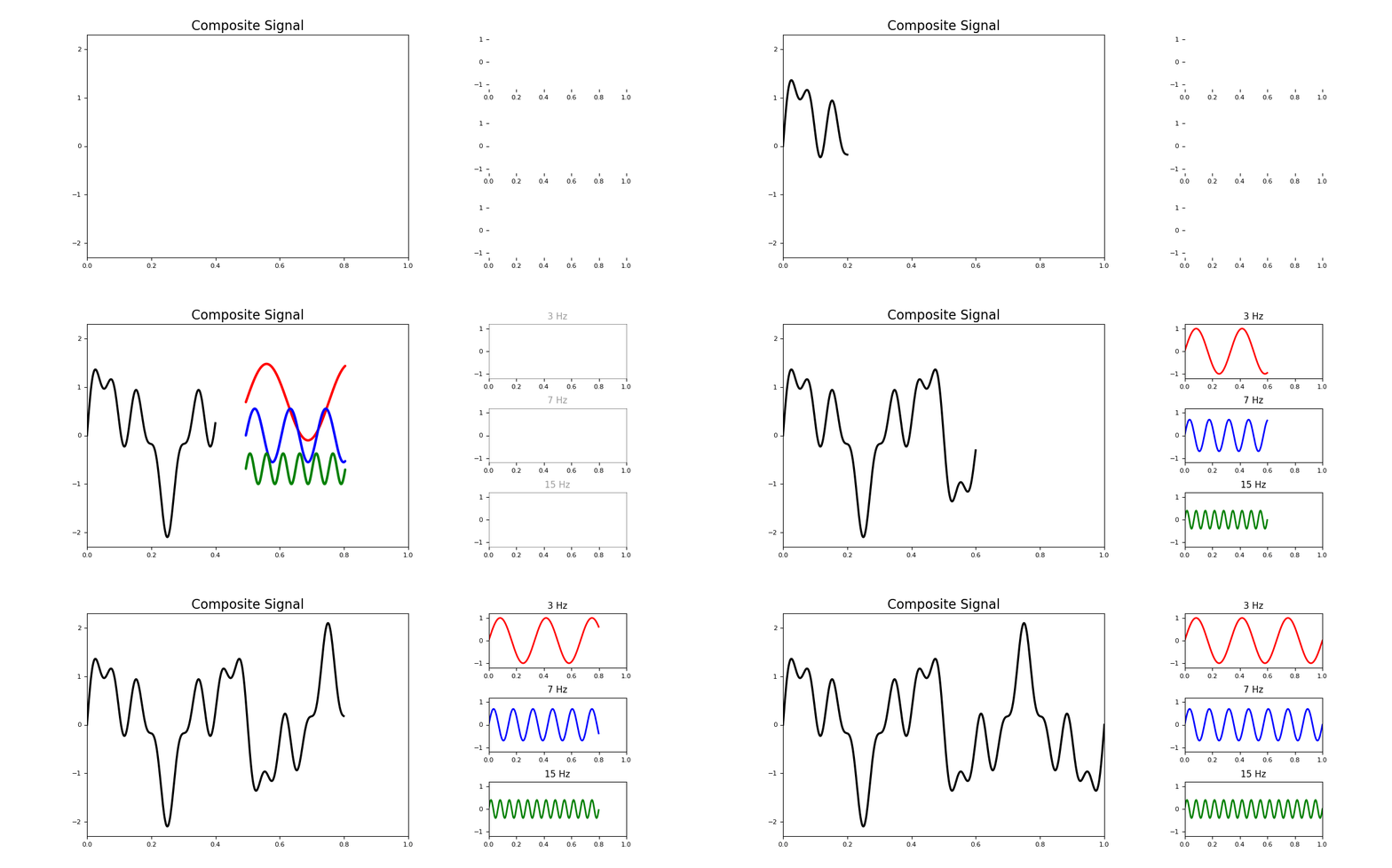
A complex time-domain vibration signal (left, black) is decomposed into its individual sinusoidal components (red, blue, green). Each component appears as a distinct sinusoidal wave in its respective plot, revealing the component frequencies present in the vibration.
Sampling Rate & the Nyquist Criterion
To capture a signal digitally, it must be sampled i.e. measured at discrete points in time. The rate at which samples are taken determines the highest frequency that can be accurately represented. If a signal is sampled too slowly, high-frequency components will appear as spurious low-frequency artifacts in the data, known as aliasing.
The Nyquist criterion defines the minimum sampling frequency required to avoid aliasing. It states that the sampling frequency must be at least twice the highest frequency present in the signal:
f0 — Highest signal frequency of interest (Hz)
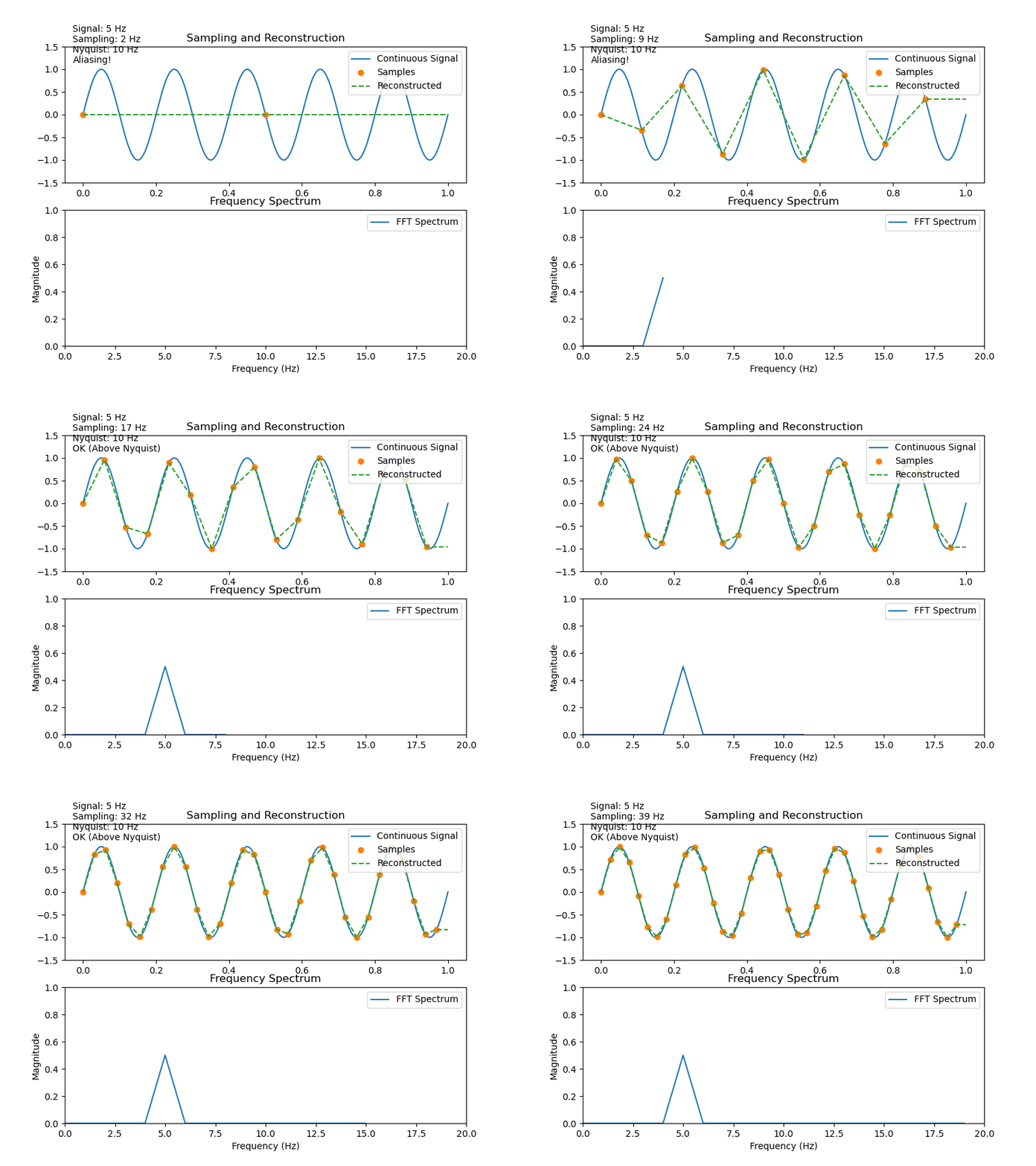
As the sampling rate increases relative to the signal frequency, the reconstructed waveform more faithfully reproduces the original. When the sampling rate falls below the Nyquist threshold, aliasing occurs the sampled signal appears at a completely incorrect frequency, corrupting the analysis.
Analog Accelerometers
- Typically higher bandwidth (several kHz)
- Sampling rate set by external ADC (application dependent)
- Can capture high-frequency fault signatures
- Well-suited for full-spectrum rail vibration analysis
Digital Accelerometers
- Bandwidth limited by internal circuitry and digital filtering
- Internal ADC sets a fixed maximum sampling rate
- May miss high-frequency vibration components
- Better suited for low-frequency trend monitoring
Data Digitization
Digitization is the process of converting a continuous analog signal into a discrete numerical representation. For accelerometers, this step determines how finely vibration amplitude can be measured and how much of the true signal survives the conversion, directly affecting diagnostic capability.
Bit Depth & Quantization Resolution
When an analog voltage is converted to a digital value, it is mapped onto a finite set of discrete levels determined by the bit depth of the analog-to-digital converter (ADC). The more bits available, the finer the granularity of that mapping. The smallest change in acceleration that can be represented is called the Least Significant Bit (LSB) size:
S — Full measurement range of the accelerometer (total span in g)
N — Number of bits used by the ADC
A larger N means more quantization steps across the same physical range, so smaller changes in acceleration are resolved as distinct values rather than being rounded to the nearest level. For analog accelerometers, the ADC is external and can be chosen freely (in principle) bit depth can be set as high as needed. For digital accelerometers, the ADC is built into the chip, and the bit depth is fixed by design.
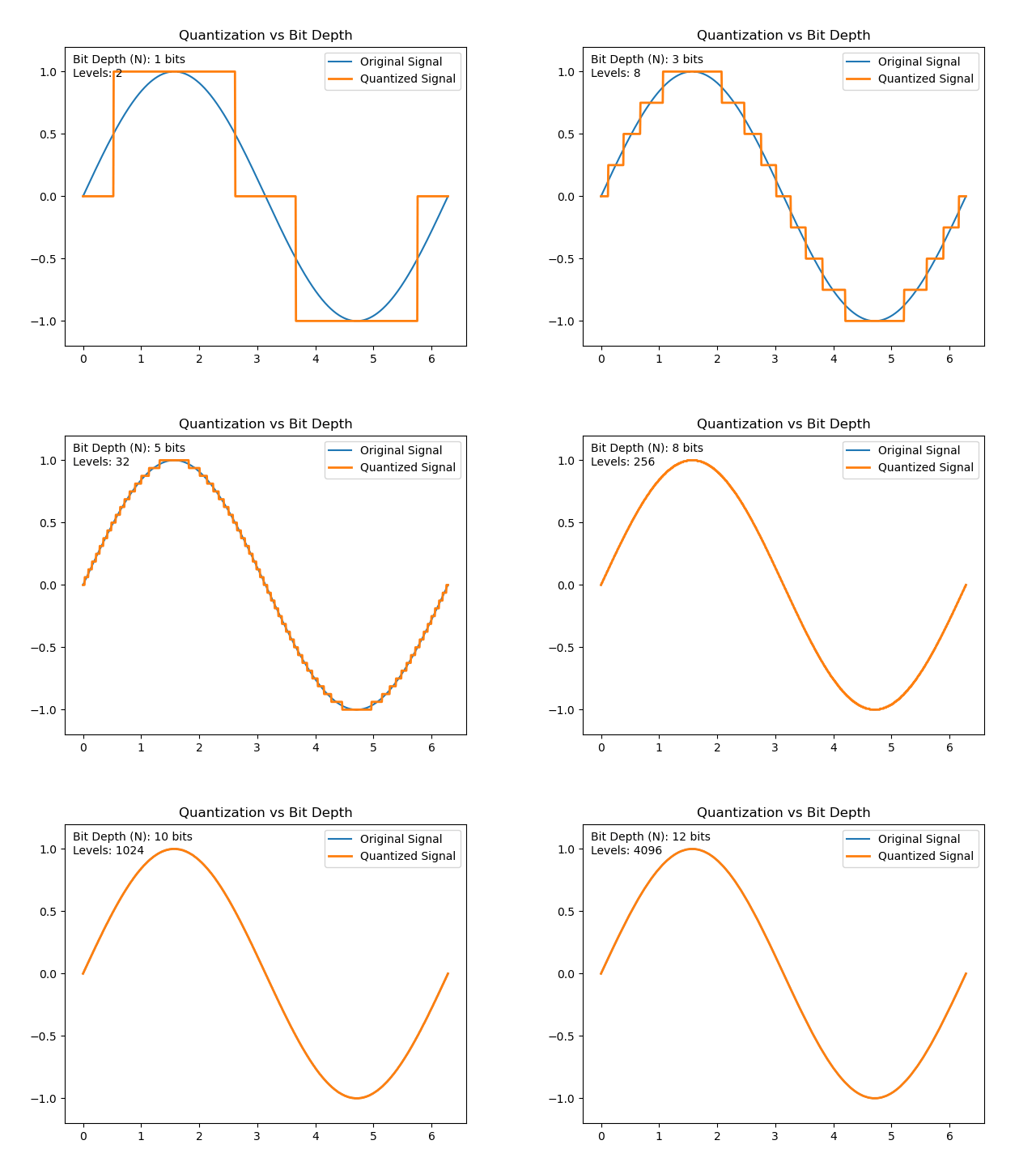
As bit depth increases, the quantization staircase becomes finer, each step represents a smaller acceleration increment. With insufficient bit depth, subtle vibration features are flattened into coarse digital steps and lost entirely. More bits = greater resolution, enabling detection of the low-amplitude signatures characteristic of early-stage component faults.
Analog Accelerometers
- No internal ADC (bit depth chosen externally)
- Can be paired with high-resolution ADCs (16-bit or more)
- Practical upper limit set by sensor noise floor, not hardware
- Adaptable to application requirements
Digital Accelerometers
- Internal ADC (bit depth fixed by design)
- Cannot be increased without replacing the device
- Lower effective resolution at fine amplitude scales
- Sufficient for broad trend monitoring and high-g events
Noise Floor & RMS Noise
Every sensor produces some level of intrinsic electrical noise, seen as random fluctuations in its output that are unrelated to actual mechanical motion. The noise floor is the threshold below which a real signal cannot be distinguished from this background noise. It sets the absolute minimum detectable acceleration for a given device.
Noise floor is typically characterized by the noise density of the sensor, expressed in units of g/√Hz. The total RMS noise across a usable bandwidth is calculated as:
noise density — Spectral noise density (g/√Hz)
BW — Usable bandwidth of the accelerometer (Hz)
Because bandwidth appears under a square root, a wider bandwidth results in proportionally higher integrated noise, a fundamental trade-off in sensor design. Analog accelerometers typically achieve far lower noise densities than their digital counterparts, giving them a significantly lower noise floor even at high bandwidths. Digital devices, constrained by low-power internal circuitry, tend to have much higher noise density values, meaning weak vibration signals are often buried beneath the noise level.
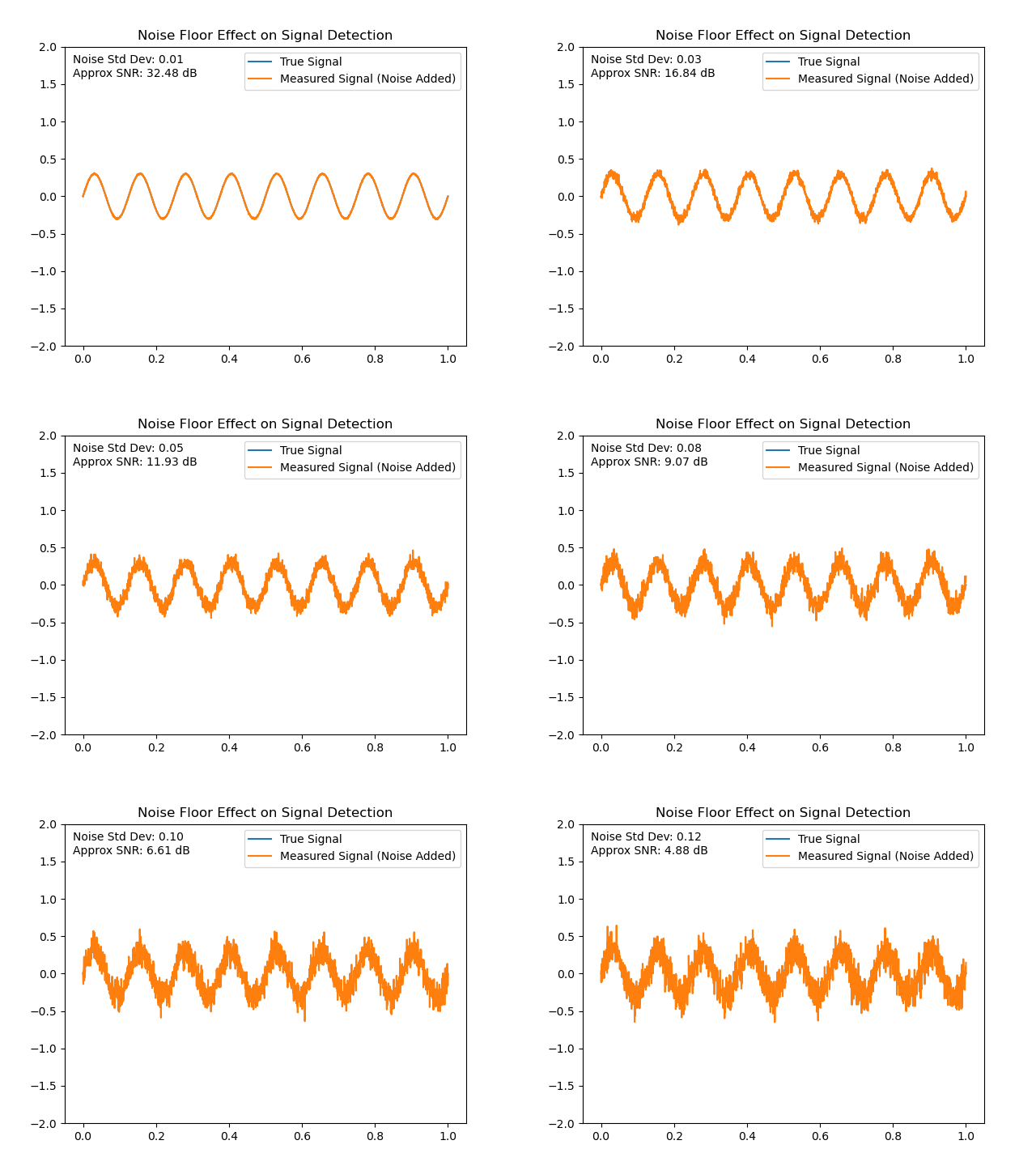
The noise floor defines the detection threshold. Any vibration signal below this level is indistinguishable from sensor noise and cannot be measured. Analog accelerometers typically exhibit a significantly lower noise floor than digital devices, making them far more sensitive to weak, early-stage fault signatures in rail components.
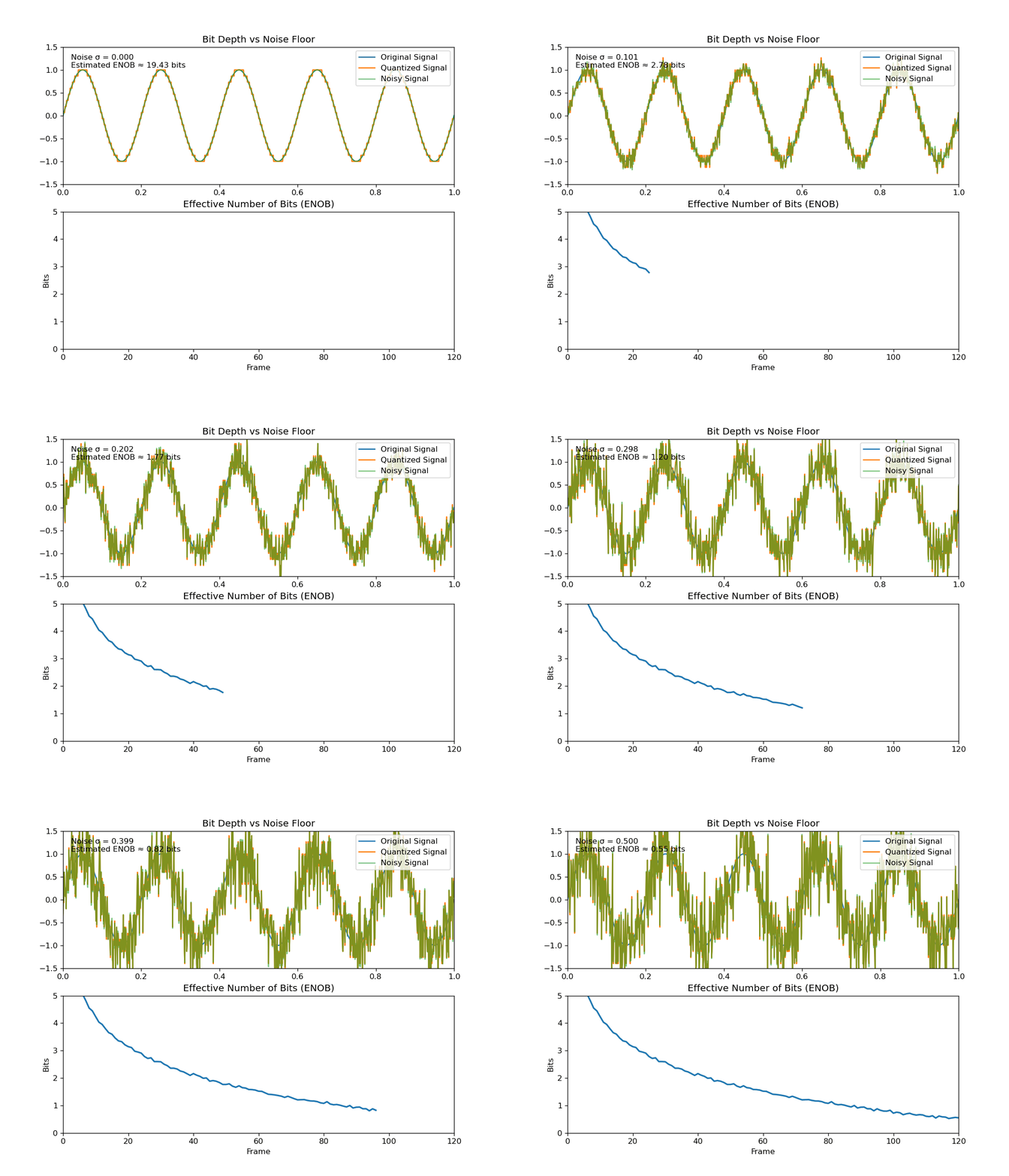
Effective Bit Depth & Practical Resolution Limits
Adding more bits to an ADC only improves resolution if the quantization step becomes smaller than the sensor's noise floor. Beyond that point, additional bits do nothing but resolve noise more finely, they do not reveal more signal. This defines a practical upper limit on useful bit depth, known as the effective bit depth.
The relationship between quantization noise and bit depth is given by the following set of equations. First, the RMS quantization noise for a given LSB is:
LSB — Least significant bit size (g)
For quantization noise to remain below the sensor's noise floor (and thus not degrade the measurement), the LSB must be kept within a practical range relative to the RMS noise of the sensor:
nRMS / 3 — Sensible bound (margin factor m = 3)
Combining these, the minimum number of bits needed to keep quantization noise below the practical threshold can be estimated as:
S — Full measurement range (g)
m — Error margin factor (3 = sensible, 6 = conservative)
nRMS — Sensor RMS noise (g)